The claim leaves your organization looking clean. Great. The code is there and documentation is attached. The team did what it was supposed to do. Then, a few days later, it comes back with a question. Not a big dramatic denial at first. More like a raised eyebrow from the payer.
Hmm, that’s different. And if you’re like many revenue cycle and coding leaders, you may’ve also noticed this shift. Your work has improved, but so has the scrutiny. There’s a reason for that. Payers are using AI too. And that means claims aren’t just being checked one by one. They’re being analyzed for patterns, inconsistencies, and anything that doesn’t quite fit. What can you do about it?
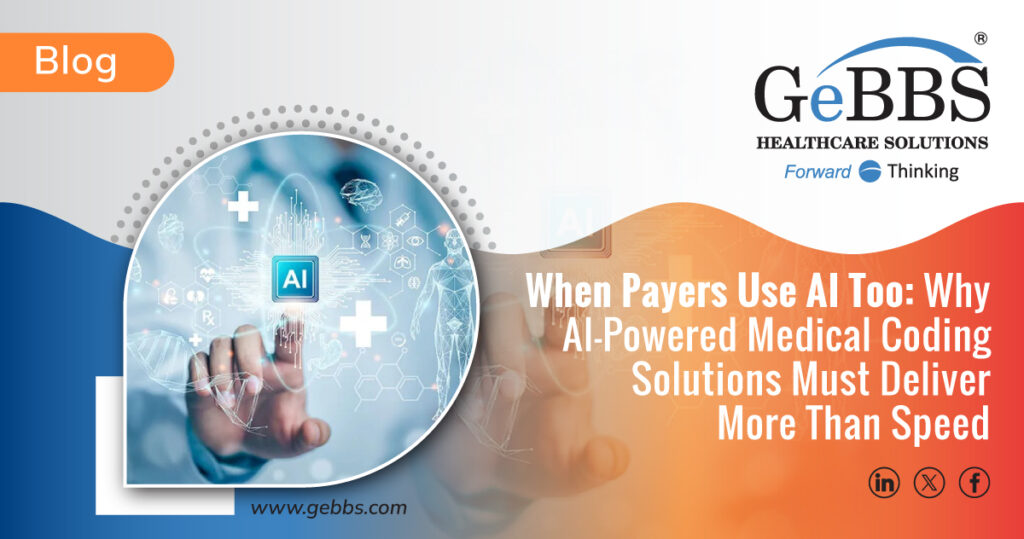
AI-powered medical coding solutions may be part of the answer—but only if they deliver more than speed. We’ll discuss that shortly, but first, let’s dig into how the medical coding landscape has changed.
The Rise of “AI vs. AI” in the Revenue Cycle
AI-powered medical coding solutions aren’t brand new. They’ve been helping coding teams reduce manual work and improve accuracy for years. And why not use them? Volumes are high. Staffing pressure is real and work queues don’t wait. So when AI helps coding teams keep accounts moving, that matters. But as mentioned, providers aren’t the only ones using AI.
Payers apply their own use of the technology. They use it to review claims, identify anomalies, compare coding patterns, and flag anything that looks unusual. Of course, payer-provider tension is nothing new. What’s different now is the speed and scale of the review.
A claim may not be reviewed as one isolated account anymore. It can be compared against thousands of other claims across providers, specialties, modifiers, and utilization trends. The claim isn’t just being checked. It’s being measured against a pattern. This subtle shift changes what “good coding” actually requires.
Why Coding Scrutiny Is Increasing
AI has given payers a superpower. Here are three ways things are changing:
There’s less tolerance for ambiguity: Vague or incomplete documentation gets flagged faster than it used to. A diagnosis may be clinically reasonable, but if the record doesn’t clearly connect the dots, “close enough” coding may not hold up.
Patterns get flagged, not just errors: Even accurate codes can be questioned if they look unusual across providers, specialties, or locations. For example, a sudden spike in one procedure code may trigger scrutiny even when individual claims are coded correctly. Why? Because AI detects patterns, and if a pattern changes, that can raise red flags.
Denials become harder to overturn: When payer decisions are supported by data models, appeals need more than a quick correction or a brief explanation. Teams need strong documentation and a defensible reason for the code selected.
The Problem with Thinking Speed Is the Answer
It’s easy to see why speed became the headline benefit of AI-powered medical coding solutions. Faster coding means fewer backlogs. Fewer backlogs should mean better financial performance. Shouldn’t it?
Not always. Faster coding doesn’t automatically mean more defensible coding. If the documentation is thin, vague, or disconnected from the selected code, speed may only move the risk downstream quicker. It’s like putting a leaky pipe under more pressure. The water moves faster. But now it’s spurting instead of just leaking.
In a high-scrutiny environment, the problem just compounds. Both errors and claims that need a closer look move faster. The next thing you know, denials pile up. And that’s the real risk. If claims go out sooner but still need to be fixed later, the problem hasn’t been solved. The cleanup has just moved to a more expensive place.
4 Benefits of AI-Powered Medical Coding Solutions
So if speed isn’t the answer, what is? No, it’s not to slow everything down. Speed is good. It just needs to be supported by stronger validation, clearer evidence, and better visibility before the claim leaves the organization. That’s where AI-powered medical coding solutions come in. Here’s how they can help.
- Accuracy at the point of coding
Coding needs to align tightly with the documentation in the record—not with what everyone assumes happened clinically. Real-time validation can help flag potential mismatches while the account is still workable. That’s much better than finding the issue weeks later, after the payer has already questioned the claim. - Defensibility, not just completion
Too often, the question is, “Was the code assigned?” But in a higher-scrutiny environment, the better question is, “Can we support it if it’s challenged?” That’s the standard now. AI-powered medical coding solutions can help connect codes to clearer clinical context, so teams aren’t scrambling to explain a decision once scrutiny begins. - Upstream issue detection
The best time to find a documentation gap is before submission. If a chart lacks specificity, if a modifier looks risky, or if a code doesn’t fit the rest of the record, the workflow should catch it early. That’s what AI-powered medical coding solutions can do. - Visibility across the workflow
Leaders need to see where risk is building across teams, departments, service lines, and payers. Otherwise, isolated denials can look like one-off events when they may actually point to a larger pattern. Sophisticated AI-powered medical coding platforms can help give leaders this broader view.
Get Claims Paid in an AI-Driven Revenue Cycle
That claim that once came back with a raised eyebrow from the payer doesn’t have to become the new normal. Yes, payer scrutiny is faster. Yes, the bar is higher. But providers aren’t powerless here.
With the right AI-powered medical coding solutions, coding teams can see risk before it leaves the building. A documentation gap can be flagged while the chart is still open. A questionable pattern becomes visible before it becomes a denial trend. That’s the power of AI. And the benefit?
You gain a calmer revenue cycle with fewer surprises and fewer back-and-forths. What’s more, your team has the confidence that your claims are not only clean, but supported and ready to stand up under review.
Are you taking advantage of all AI has to offer? GeBBS’ AI-powered medical coding solutions can help. We help hospitals and health systems strengthen coding accuracy, identify documentation gaps earlier, and improve workflow visibility before claims leave your organization. With AI-enabled medical coding and deep revenue cycle expertise, GeBBS gives coding teams the support they need to work smarter in a more scrutinized environment. Ready for fewer surprises and more defensible claims? Contact GeBBS today to learn how we can help.